Land Rover · 1993–2026
Defender Recalls
12 known recalls affecting the Land Rover Defender (1993–2026). Enter your VIN to check if your specific vehicle is affected, or browse by model year below.
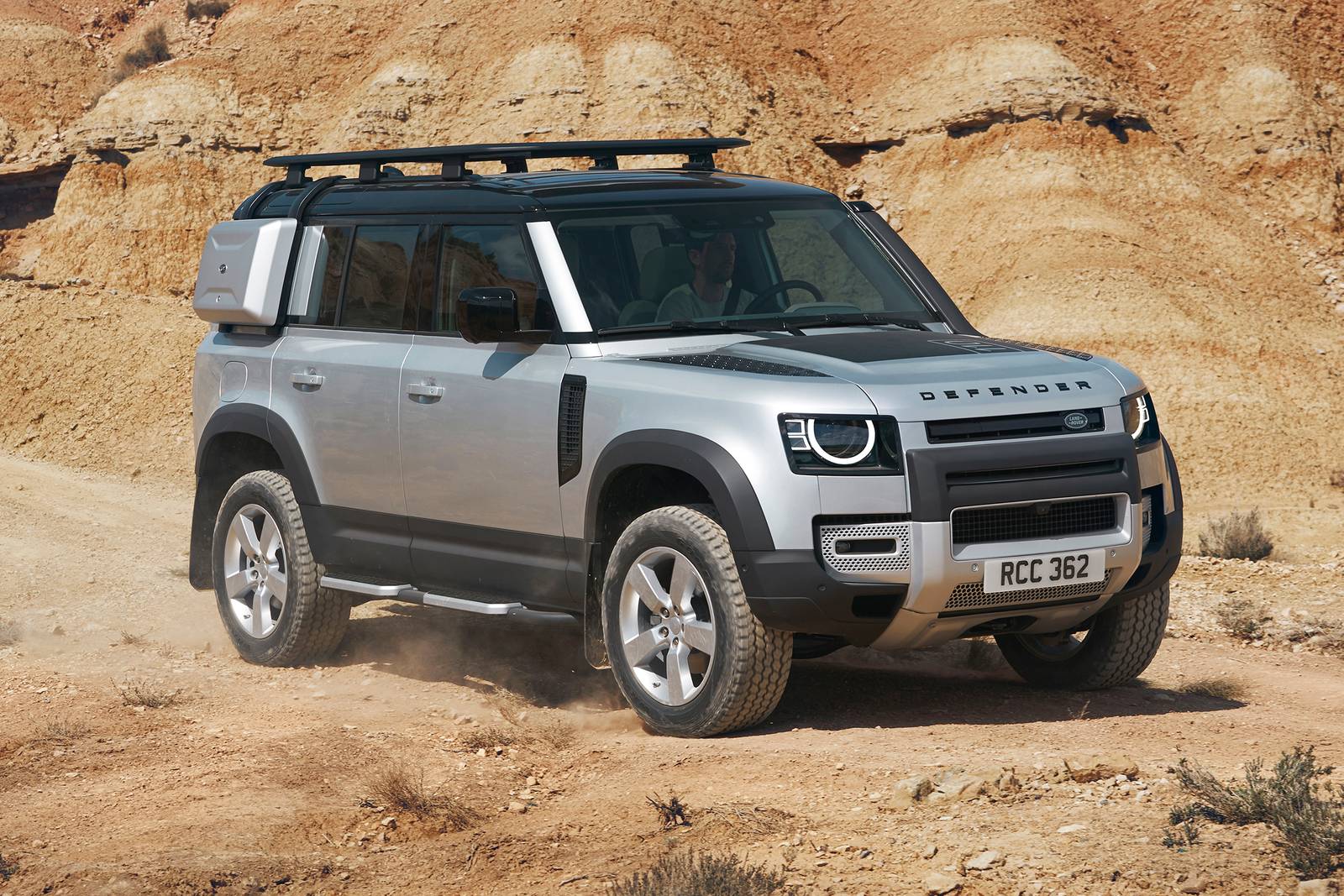
Land Rover Defender Recalls
Summary
Issue: On certain vehicles, a software problem could cause the touch screen to remain blank when the vehicle is started. As a result, the rearview camera image would not appear on the display. Canadian regulations require the rearview image to display when the transmission is shifted into reverse gear. Note: This recall only affects vehicles equipped with a 10-inch touch screen. Safety Risk: A rearview camera image that doesn't display could reduce a driver's ability to see behind the vehicle while backing up. This could increase the risk of a crash. Corrective Actions: Land Rover will notify owners by mail and advise you to take your vehicle to a dealership to update the touch screen software.
Summary
Issue: This recall is for raised air intakes installed on new vehicles or sold as a dealer accessory. On certain vehicles, the raised air intake may not have been attached properly. As a result, the raised air intake could loosen and detach while driving. Safety Risk: A raised air intake that detaches from the vehicle could create a road hazard for others and increase the risk of a crash. Corrective Actions: Land Rover will notify owners in writing and advise you to take your vehicle to a dealership to secure the raised air intake.
Summary
Issue: This recall is for certain replacement engines. The oil filter housing may not have been manufactured properly. Over time, the housing could crack and cause oil to leak onto hot components in the engine compartment. Safety Risk: Oil that leaks onto hot components can create the risk of a fire. Additionally, an oil leak could create a hazard for others and increase the risk of a crash. Corrective Actions: None of the affected engines have been installed in vehicles. Land Rover will instruct dealers to replace the oil filter housing assembly before each engine is installed.
Summary
Issue: On certain vehicles, the oil filter housing may not have been manufactured properly. Over time, the housing could crack and cause oil to leak onto hot components in the engine compartment. Safety Risk: Oil that leaks onto hot components can create the risk of a fire. Additionally, an oil leak could create a hazard for others and increase the risk of a crash. Corrective Actions: Land Rover will notify owners by mail and advise you to take your vehicle to a dealership to replace the oil filter housing. Land Rover advises to stop driving the vehicle and contact a dealer if you notice oil leaking or an oil warning light.
Summary
Issue: On certain Defender 130 models, the latch that locks the backrest for the third-row seat may not have been manufactured correctly. As a result, the seat backrest may not fully lock in place. Safety Risk: A seat backrest that isn't locked could move in a crash and increase the risk of injury. Corrective Actions: Land Rover will notify owners by mail and instruct you to take your vehicle to a dealership to inspect the third-row seat, and replace the backrest if necessary. To reduce the safety risk, Land Rover recommends not to use a child car seat that requires a top-tether in the third-row seat until the recall repairs have been completed.
Summary
Issue: On certain vehicles, an oil channel in the engine camshaft carrier wasn't drilled correctly. As a result, a buildup of oil pressure could cause an oil leak. Safety Risk: An engine oil leak can create the risk of a fire. Corrective Actions: Land Rover will notify owners by mail and instruct you to take your vehicle to a dealership to inspect the camshaft carrier and replace it, if necessary. The dealer will also replace the catalytic converter, gasoline particulate filter (GPF) and exhaust oxygen sensors, as necessary.
Summary
Issue: On certain vehicles, the driver and front passenger seat belt pretensioners could be damaged. As a result, the seat belt pretensioners may not work properly in a crash. Safety Risk: A seat belt pretensioner that does not work properly could increase the risk of injury in a crash. Corrective Actions: Land Rover will contact owners by mail and instruct you to bring your vehicle to a dealership to inspect the front seat belt pretensioner tubes for damage. The dealer will replace the driver and front passenger seat belt retractors, if necessary.
Summary
Issue: On certain vehicles, the passenger seat belt assemblies may contain defective automatic locking retractors (ALR). As a result, the seat belts may not properly lock to secure a child seat. Note: The vehicle's lower universal anchorage system (UAS) is not affected by this defect and may still be used to secure a child seat. Safety Risk: A seat belt that is used to secure a child restraint but is not properly locked could increase the risk of injury in a crash. Corrective Actions: Land Rover will notify owners by mail and instruct you to take your vehicle to a dealer to inspect the seat belts. They will be replaced, if necessary.
Summary
Issue: On certain vehicles, the seat track end-stops could bend. If this happens, the seat track may not lock properly in place and the seat could move in a crash. Note: This recall only affects vehicles equipped with a manual fore-aft adjustment for the front seats. Safety Risk: A seat that moves in a crash could create an increased risk of injury. Corrective Action: Jaguar Land Rover will notify owners by mail and instruct you to bring your vehicle to a dealer to replace the front seat tracks.
Summary
Issue: On certain Defender X models, the brake lights, turn signals and/or tail lights may suddenly turn off if a bright light shines directly on them. Safety Risk: Brake lights or turn signals that do not work properly could make the vehicle less visible. They could also cause a following driver not to recognize that a vehicle is braking or intends to turn. This could increase the risk of a crash. Corrective Actions: Land Rover will notify owners by mail and instruct you to take your vehicle to a dealer to replace the rear lamp assemblies.
Showing 1-10 of 12 recalls

Related Recall Checks
Check recalls for specific Land Rover Defender model years